What Is Machine Learning? A Plain-English Guide
A calm, beginner-friendly guide to machine learning: how computers learn from examples instead of rules, the three main types, and honest limits.
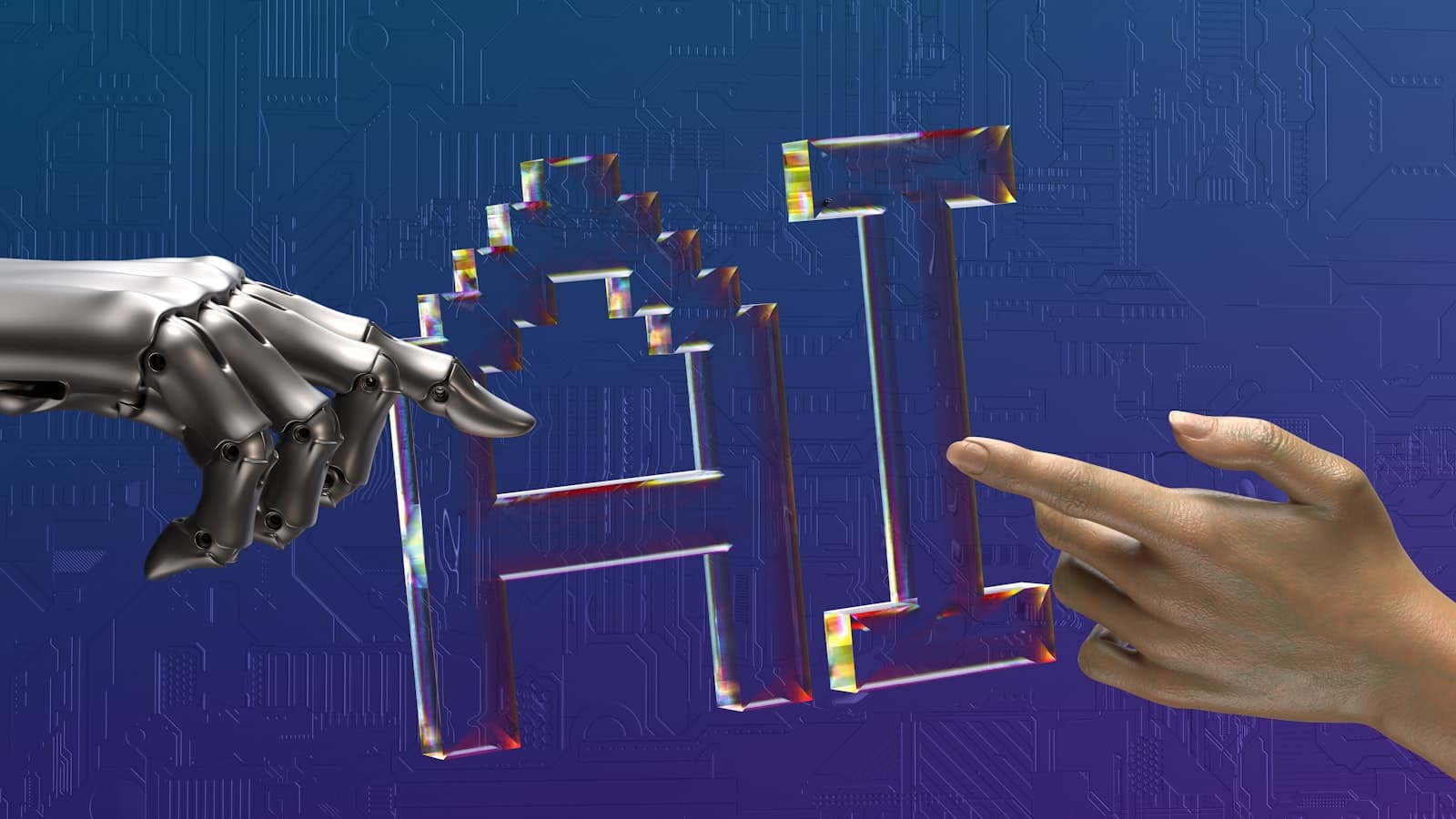
This morning my email app quietly moved a message into spam before I ever saw it. Nobody at the company sat down and wrote a rule that said "if the sender promises me ten million dollars from a stranded prince, hide it." There are too many ways to write that message, in too many languages, with too many tricks. Instead, the filter had seen millions of emails people had marked as junk, noticed what they tend to have in common, and learned to spot the next one on its own.
That quiet little decision is machine learning. And once you see how it works, a lot of the technology around you stops feeling like magic and starts feeling like something you can actually understand.
The old way: telling the computer every rule
For most of computing history, programming meant writing down explicit instructions. You, the human, figured out the rules, and the computer followed them exactly. If you wanted a program to recognise a cat in a photo, you'd have to describe a cat in code: it has pointy ears, whiskers, fur, four legs, two eyes.
Try it for thirty seconds and you'll feel the problem. What about a cat curled into a ball, hiding its legs? A black cat in a dark room? A cat seen from behind? A fluffy dog that looks suspiciously like a cat? Every rule you write needs ten exceptions, and every exception needs ten more. You'd spend a lifetime and still miss cases.
Traditional programming is fantastic when the rules are clear and few: a calculator, a tax form, an alarm clock. But for messy, real-world stuff like recognising faces, understanding speech, or catching fraud, writing every rule by hand is hopeless.
The new way: showing examples instead
Machine learning flips the whole thing around. Instead of writing the rules yourself, you show the computer thousands or millions of examples and let it figure out the rules.
You don't describe a cat. You show the system a hundred thousand photos, each one labelled "cat" or "not cat," and you let it discover, on its own, the patterns that separate one from the other. Nobody tells it to care about ear shape or fur texture. It works that out by being shown enough examples and being corrected when it's wrong.
Here's the analogy I keep coming back to. A child doesn't learn what a dog is from a definition. No parent says "a dog is a quadrupedal mammal of the family Canidae." They point at dogs in the park, in books, on the street, and say "dog, dog, dog." After enough pointing, the child just knows, even for breeds they've never seen. Machine learning learns the same way: not from rules, but from repeated examples.
What "training" and "data" actually mean
Two words come up constantly in machine learning, and they sound more technical than they are.
Data is just the examples. Photos, emails, sales records, voice recordings, clicks. The more varied and honest your examples, the better the system can learn. Data is the textbook the computer studies from.
Training is the process of studying that textbook. The system makes a guess, checks it against the right answer, and nudges itself a little when it's wrong. Then it does that again. And again. Millions of times. Each tiny correction makes the next guess slightly better, the way you'd improve at darts by throwing, seeing where it landed, and adjusting your aim.
When training finishes, you're left with something called a model: the frozen, learned set of patterns. The model is what actually does the work afterwards. Training is the studying; the model is the graduate who now answers questions. Training can take a roomful of computers and a lot of electricity. Using the finished model is usually cheap and fast, which is why your phone can run one instantly.
The three big types of machine learning
Machine learning comes in three main flavours, and you can understand all three with everyday examples.
Supervised learning: studying with an answer key
This is the most common type, and it's the cat-photo example. You give the system examples and the correct answers, like a student with a textbook that has the solutions printed in the back. Email labelled spam or not spam. Houses with their final sale prices. X-rays marked healthy or not.
The system learns the relationship between the question and the answer, then applies it to new cases it's never seen. "Supervised" just means a human supplied the right answers during training. It's learning with a teacher looking over your shoulder.
Unsupervised learning: finding groups with no answer key
Sometimes you have a pile of data and no labels, and you just want the computer to find structure on its own. This is unsupervised learning.
Imagine handing a child a box of mixed buttons and saying "sort these into groups." You haven't told them the categories. They might group by colour, or size, or number of holes. They'll find some sensible structure without being told what to look for. That's unsupervised learning: spotting natural clusters and patterns in data nobody labelled. Shops use it to discover that certain customers tend to buy similar things, without anyone deciding those customer types in advance.
Reinforcement learning: learning by trial and reward
The third type learns through consequences. The system tries something, gets a reward or a penalty, and gradually figures out which actions lead to good outcomes.
This is exactly how you'd train a puppy. Sit, and you get a treat. Chew the shoe, and you get a firm "no." Over time the puppy learns the behaviours that earn treats. Reinforcement learning works the same way, which is why it's behind game-playing systems and robots learning to walk. They fumble, they're scored, they adjust, and slowly they get good.
Where you already use it every day
You don't need to work in tech to live surrounded by machine learning. It's quietly running underneath things you touch constantly.
- Spam filters. The example I opened with. They learned from billions of emails people flagged as junk.
- Recommendations. When a streaming service suggests a show, or a shop suggests a product, it learned from what people with similar tastes watched or bought.
- Maps and navigation. Your route app predicts traffic and arrival times by learning from years of how traffic actually moved.
- Fraud detection. Your bank flags a strange purchase because a model learned what your normal spending looks like, and this didn't fit.
- Face unlock. Your phone learned the pattern of your face from sample images, so it can recognise you in new lighting, with or without glasses.
None of these were built by someone writing "if this, then that" for every possible case. They were all built by feeding examples to a system and letting it learn.
How ML fits with AI and deep learning
These three terms get thrown around as if they mean the same thing, so let me untangle them. Think of nesting dolls, the kind where each one opens to reveal a smaller one inside.
Artificial intelligence (AI) is the biggest doll: the whole idea of making machines do things that seem intelligent. That's a huge, old umbrella.
Machine learning is a doll inside it: one particular approach to AI, the "learn from examples" method we've been discussing. It's the most successful approach we've found, but it's not the only thing AI could ever mean.
Deep learning is a smaller doll inside machine learning: a specific technique using structures loosely inspired by the brain, called neural networks, stacked in many layers. Deep learning is what made recent breakthroughs possible, including the large language models behind today's chatbots.
So when a headline says "AI," it almost always means machine learning, and increasingly it means deep learning specifically. Same family, different sizes.
The honest limits
I promised you plain English, and plain English includes the uncomfortable parts. Machine learning is powerful, but it is not magic, and pretending otherwise leads to real harm.
Garbage in, garbage out. A model is only as good as the examples it studied. Feed it incomplete, sloppy, or misleading data and it will confidently learn the wrong lessons. There's no clever algorithm that rescues you from bad data.
Bias is inherited, not invented away. If the historical data reflects human prejudice, the model learns that prejudice and repeats it, often while looking neutral and objective. A hiring model trained on past decisions can quietly absorb the same unfairness those decisions contained. The maths doesn't cleanse the bias; it amplifies and hides it.
There is no real understanding. This is the one I most want you to hold onto. A model that labels cats does not know what a cat is. It found statistical patterns that happen to work most of the time. It has no concept of an animal, no idea why ears matter. That's why these systems can be brilliant and then fail in ways no human ever would, confidently and without warning.
Where this leaves you
Strip away the jargon and machine learning is a simple, almost humble idea: instead of telling a computer every rule, you show it enough examples that it works the rules out for itself. That's the whole trick. Everything else, the three types, the training, the deep learning, is detail layered on top of that one shift.
You don't need maths to grasp what's happening when your phone recognises your face or your bank flags a strange charge. You need the shape of the idea: examples in, patterns out, applied to something new. Once you carry that shape with you, the technology stops being a black box and becomes something you can question, use wisely, and learn more about on your own terms.
Frequently asked questions
- Do I need to be good at maths to understand machine learning?
- No. Building cutting-edge systems involves serious maths, but understanding what machine learning is and how it works requires none of it. The core idea, learning patterns from examples instead of following written rules, is plain English, as this guide hopefully showed.
- What is the difference between machine learning and AI?
- Artificial intelligence is the broad goal of making machines act intelligently. Machine learning is one specific way of getting there: learning from examples. Think nesting dolls, with machine learning sitting inside the larger idea of AI, and deep learning sitting inside machine learning.
- Can a machine learning model actually think or understand?
- No. A model finds statistical patterns that work most of the time, but it has no genuine understanding of what it's doing. It can label a photo of a cat without having any concept of an animal. That's why it can fail confidently in strange ways, and why human oversight still matters.
- Why do people say models can be biased?
- A model learns from the data it's shown. If that data reflects human prejudice or leaves groups out, the model absorbs and repeats those flaws, often while appearing neutral. The maths doesn't remove bias; it can quietly magnify it. Good results depend on careful, honest, representative data.
- What does it mean to train a model?
- Training is the studying phase. The system makes a guess, checks it against the correct answer, and nudges itself when it's wrong, repeating that millions of times. What's left at the end is the model: the frozen set of learned patterns that does the actual work afterwards.
Further reading on this site
- How Large Language Models Actually Work — the deep-learning systems behind today's chatbots, explained the same plain way.
- How to Start Learning AI in Tanzania — turning this understanding into a real, practical skill.
- Browse Education — more plain-English explainers like this one.
If this made machine learning click for you, subscribe to the newsletter and I'll send the next plain-English breakdown straight to your inbox.
The Newsletter
Liked this essay?
Get the next one in your inbox. One thoughtful email a week, nothing more.
Keep reading
Related articles
What Is Vibe Coding? A Plain-English Guide
Vibe coding means describing what you want and letting AI write the code while you steer. Here is how it works, what it's great for, and where it bites.
June 10, 2026 · 8 min read
How Large Language Models Actually Work (Plain English)
A calm, honest explainer on how large language models work: tokens, training, parameters, fine-tuning, context windows, and why LLMs hallucinate.
June 5, 2026 · 11 min read

What Is Cloud Computing? A Plain-English Guide
A calm, beginner-friendly guide to cloud computing: what the cloud really is, the everyday apps you already use, IaaS/PaaS/SaaS, and the honest tradeoffs.
April 30, 2026 · 10 min read