Keeping Faith and Focus in the Age of Endless Feeds
Algorithmic feeds are built to fragment your attention — the very thing prayer and scripture require. A practical, honest guide to reclaiming focus.
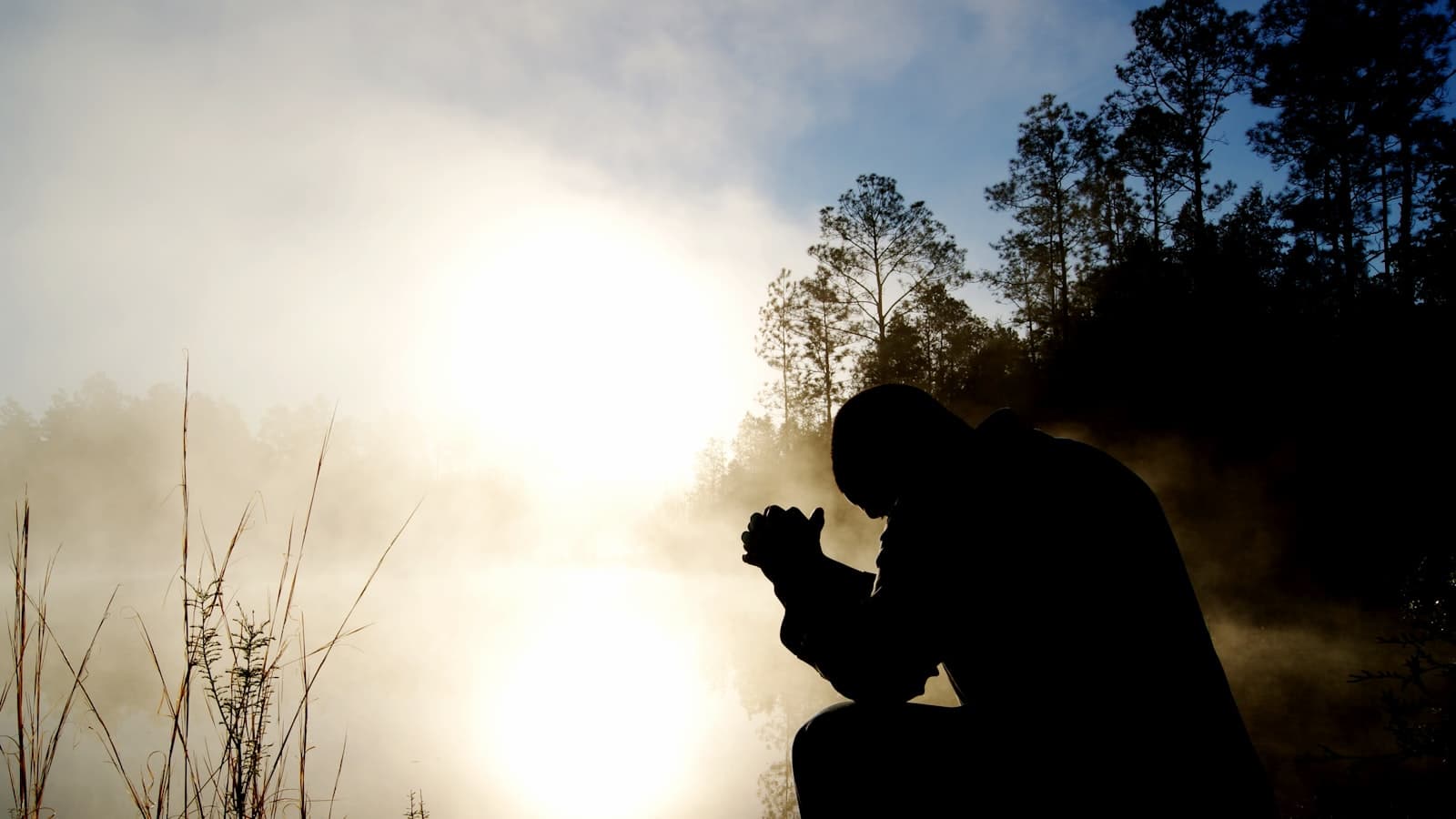
The first thing my hand does in the morning, before my eyes are fully open, is reach for the phone on the floor beside my mattress. I do not decide to do this. The decision was made for me long ago, by repetition, by design. Before I have prayed, before I have greeted my own household, before I have had a single thought that is mine, I have already scrolled past a dozen lives, three opinions I did not ask for, and a notification telling me someone disagreed with me at 2 a.m.
I am not writing this from a mountaintop of mastery. I am writing it as someone still fighting, most days losing a little, occasionally winning. But I have come to believe something I cannot shake: that attention is the new battleground for the soul, and that most of us did not notice the war begin.
What the feed quietly takes
Here is the thing nobody tells you when you download the app. The feed is not neutral. It is not a glass of water waiting patiently for you to drink. It is engineered, by some of the most talented people alive, to capture and hold the one resource you cannot get back: your attention.
And attention is exactly what the spiritual life is made of.
Think about it honestly. Prayer requires sustained attention — you cannot commune with God in three-second bursts between reels. Scripture requires it; the meaning of a passage rarely arrives in the first skim. Deep relationship requires it, the kind where you actually listen to your spouse, your mother, your friend, instead of half-listening while a screen glows in your peripheral vision. Even rest requires it, because true rest is presence, and you cannot be present to a sabbath you keep interrupting.
The feed does not attack your faith directly. It would be easier if it did; we know how to resist an enemy at the gate. Instead it starves your faith slowly, by eating the attention that faith feeds on. You do not lose your prayer life in a dramatic crisis. You lose it the way you lose a friendship you stop visiting — a little at a time, until one day you realize you cannot sit still with God for ten minutes without reaching, reflexively, for the glowing rectangle.
Why scrolling feels impossible to stop
It helps to understand what you are actually up against, because then you stop blaming yourself for a lack of willpower and start seeing it as a designed trap.
The infinite scroll works on a simple, ancient principle: the variable reward. Pull the handle of a slot machine and sometimes you win, sometimes you lose, and you never know which. That uncertainty is far more addictive than a guaranteed prize. Your feed is the same. Most posts are dull. But every so often — you never know when — something delightful, infuriating, or affirming appears. So your thumb keeps pulling the handle, chasing the next hit, and the bottom of the page never comes, because there is no bottom by design.
Add to this the notification, which hijacks a real and good thing: our God-given alertness to one another. We are made to turn toward a voice that calls our name. The buzz in your pocket borrows that instinct and points it at a machine. Add the subtle social pressure to respond instantly, the fear of missing out, the way novelty itself triggers a small chemical reward — and you have a system that a tired human, reaching for a phone in the dark, cannot easily out-muscle.
I say this not to excuse us but to free us. You are not weak for finding this hard. You are a normal person facing an extraordinarily well-designed adversary. Naming it honestly is the first act of resistance.
This is a spiritual issue, not just a productivity one
I want to be careful here, because there is a version of this conversation that is purely about efficiency — reclaim your focus so you can get more done, build your brand, win at hustle. That is not what I mean, though I have written about the work side of it in Deep Work in the Age of Infinite Distraction.
What I mean is closer to the heart. A fragmented attention produces a fragmented soul. If I cannot hold a single thought for more than a minute, I cannot hold a single prayer. If I am always half-here, I am never fully present — not to God, not to people, not to my own life as it actually happens. The scattered mind and the shallow spirit tend to travel together.
There is an old desert wisdom that the monks called attention or watchfulness — guarding the door of the heart, noticing what you let in. They had no smartphones, yet they understood that the inner life is shaped by what we attend to. We have simply industrialized the problem they spent their lives resisting.
Concrete practices that actually help
Let me offer what has helped me, plainly, without pretending any of it is easy.
The phone-free morning. Do not let the feed have the first word. The first thirty minutes of your day set its tone. I now keep my phone charging across the room, not by my bed, so that turning off the alarm does not become a portal into the scroll. The first thing I want my attention to land on is not a stranger's outrage. It is, ideally, a prayer and a verse — even a short one.
Notification hygiene. Turn off nearly everything. Real people who need you will call. The rest can wait for when you choose to look. I went through my phone and switched off every notification except calls and direct messages from a small list of people. The silence in my pocket was, at first, unnerving. Now it feels like sanity.
Single-tasking. We were sold the lie of multitasking. The mind does not actually do two things at once; it switches rapidly between them, paying a tax each time. Do one thing. Read scripture without a second screen. Pray without your phone in the room. Eat a meal with people and let it just be the meal.
Replacing the reflex. This is the deepest one. The reach for the phone is a reflex that fills a small emptiness — a moment of boredom, anxiety, or waiting. You cannot simply delete a reflex; you have to give it something else to reach for. When I feel the pull now, I try, imperfectly, to turn it into a breath of prayer instead. Standing in a queue, waiting for the kettle — these dead moments become small doorways instead of small scrolls.
And then there is the larger rhythm, the one I have found most restorative of all: a weekly day of deliberate disconnection. Here is how I do it.
How-to
A Weekly Digital Sabbath and Attention Reset
A simple, repeatable weekly practice to interrupt the scroll-reflex, restore your capacity for sustained attention, and make room for prayer, rest, and real presence.
Estimated time: P1D
- 01
Choose a fixed window
Pick a recurring block — a full day if you can, or a single evening to start. Sundays after worship work well. Put it on the calendar so it is a decision already made, not one you renegotiate when the time comes.
- 02
Tell the people who matter
Let close family or friends know you will be slow to reply. This removes the anxiety that someone urgent cannot reach you, and quietly invites them to consider the same.
- 03
Physically remove the trigger
Power the phone down, or leave it in a drawer in another room. Out of sight genuinely matters; willpower fails far more often than a closed drawer does.
- 04
Plan a presence-rich alternative
Idle hands reach for screens. Decide beforehand what fills the space — scripture and prayer, a walk, a long meal, time with children, a book on paper. Have it ready so the gap does not pull you back.
- 05
Sit with the discomfort
Expect the first hour or two to feel restless, even anxious. That restlessness is the withdrawal of an attention that has been over-stimulated. Do not flee it. Let your mind slow to its natural pace; this is where prayer and real thought return.
- 06
Reflect before you reconnect
Before picking the phone back up, pause and notice: was your mind quieter, your prayers deeper, your presence fuller? Carry one observation into the week. The point of the reset is not the day off, but the changed appetite it leaves behind.
Start small. A full digital sabbath sounds heroic and is easy to fail at and abandon. One screen-free evening, kept faithfully, will teach you more than an ambitious vow you break by Tuesday.
An honest word on how hard this is
I will not end with the tidy promise that you will fix this in a week. I have not fixed it in years. The pull is strong, the design is relentless, and I still catch my hand reaching for the phone before my mind has even woken. There are seasons I do better and seasons I slip. That is the truth of it.
But here is what keeps me at it. Attention is, in the end, a form of love. What you give your attention to is what you treat as real, as worthy, as present. To attend to God is to love him. To attend to a person is to honor them. To attend to your own one life is to receive it as a gift rather than scroll past it. The feed is, quietly, a competitor for that love — and it never tires, never sleeps, never stops asking.
So this is not really a battle for productivity. It is a battle to keep the door of the heart, to remain capable of the sustained, costly, unhurried attention that prayer and people and presence require. We will not win it perfectly. But we can refuse to surrender it by default. We can, this morning, leave the phone across the room — and let the first thing our attention touches be something we actually chose.
Further reading on this site
Frequently asked questions
- Isn't calling this a 'battle for the soul' a bit dramatic?
- I understand the worry, but I mean it carefully. The soul is fed by sustained attention — to God, to scripture, to people. The feed is engineered to fragment exactly that attention. It is not dramatic to notice that a thing competing for the resource your spiritual life depends on deserves to be taken seriously. The drama would be in pretending it costs nothing.
- Do I have to delete social media to take this seriously?
- No. This is not a law, and deleting everything is neither required nor always wise — these tools genuinely connect families and communities. The goal is to move from compulsive, reflexive use to intentional, chosen use. For some that means deleting an app; for others it means notification hygiene and a weekly sabbath. Discern your own weak points honestly.
- I've tried a digital sabbath and felt anxious and restless the whole time. Am I doing it wrong?
- You are doing it right. The restlessness is the point — it is the withdrawal of an over-stimulated attention, and it is information about how deep the dependence runs. Do not flee it. Sit with it, let your mind slow to its natural pace, and you will usually find that prayer and real thought return on the other side of the discomfort.
- How is this different from a productivity hack?
- Productivity asks how to focus so you can produce more. This asks something deeper: what are you giving your attention, and therefore your love, to? You can be highly productive and still spiritually fragmented. The aim here is presence — to God, to people, to your own life — not output.
- What is the single smallest step I can take today?
- Move your phone charger across the room tonight so it is not the first thing you reach for tomorrow. Let the first thirty minutes of your day belong to prayer and a verse instead of the feed. One faithful small change beats an ambitious vow you abandon by Tuesday.
If this resonated, subscribe to the newsletter and I'll send the next reflection straight to you.
The Newsletter
Liked this essay?
Get the next one in your inbox. One thoughtful email a week, nothing more.
Keep reading
Related articles

Raising Kids with Faith in a Screen-Saturated Age
How do you raise children of faith amid screens, algorithms, and AI? An honest, practical guide on rhythms, modeling, and boundaries without legalism.
May 4, 2026 · 12 min read

Will AI Kill Our Faith? An Honest Christian Take for 2026
An honest Christian look at whether AI will kill our faith — what outsourcing thinking, awe, and patience to machines does to the soul.
June 13, 2026 · 7 min read

What to Ask the Holy Spirit, and What to Ask ChatGPT
A practical framework for the believer in the AI age — when to ask ChatGPT for information and when to seek the Holy Spirit for wisdom and discernment.
June 11, 2026 · 8 min read