Will AI Kill Our Faith? An Honest Christian Take for 2026
An honest Christian look at whether AI will kill our faith — what outsourcing thinking, awe, and patience to machines does to the soul.
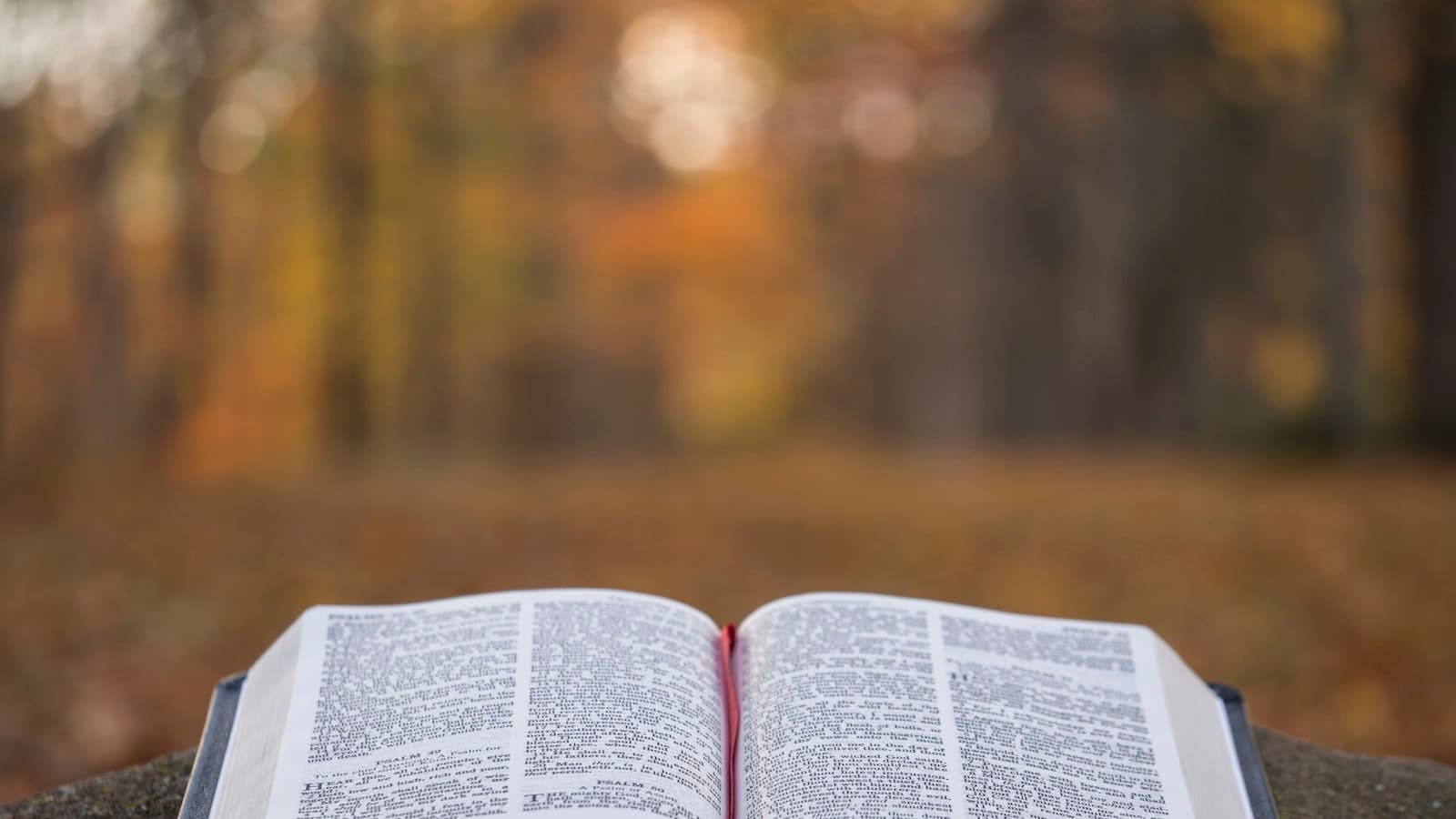
A friend told me she had stopped praying about her decisions. Not out of rebellion. Out of efficiency. She would type the situation into a chatbot, get a clean three-point answer in nine seconds, and move on. "It's basically the same thing," she said. "I'm asking for wisdom."
I didn't argue. But something in me went quiet, the way it does when you see a small thing that is actually a large thing wearing small clothes.
People assume the danger of AI is that it will say something heretical. It won't, mostly. The danger is quieter than that. The hard part isn't a robot denying God. The hard part is the boring part: that we slowly stop doing the slow things — waiting, wrestling, sitting in silence until something shifts — because a faster substitute is always one tab away.
So let me answer the question in the title plainly, because I think the honest answer matters more than a dramatic one.
No. AI will not kill your faith.
But it can starve a faith you were already neglecting. And it can do it so gently you'll thank it on the way down.
Technology amplifies the heart it finds
Here is the frame I keep returning to. A tool does not create a direction in you. It magnifies the direction that is already there.
Give a generous person more money and you get more generosity. Give a fearful person more money and you get a tighter fist. The money didn't decide. It amplified. AI is the same, only faster and closer to the inside of your head than money ever was, because it operates on your thoughts, your questions, your sense of what is true.
If your faith is alive — if you are actually walking with God, praying, doubting honestly, returning — then AI becomes one more servant. A fast one. A useful one. It will help and then get out of the way.
If your faith is mostly a habit you've stopped feeling, AI will not attack it. It will simply offer to do the parts you found tiring. The reading. The thinking. The reaching. And a faith that never reaches eventually forgets it has hands.
Four ways AI can quietly erode faith
I want to be specific, because vague warnings are useless and a little cowardly.
Outsourced reflection. Discernment is not information retrieval. When I bring a hard decision to prayer, the answer is rarely the point — the forming is the point. The waiting changes me. The chatbot skips the waiting. It hands me a conclusion without the person I would have become by reaching it slowly.
Counterfeit intimacy. This one I find genuinely sad. An AI companion will always answer, never tire, never confront you with an inconvenient truth at an inconvenient hour. It feels like presence. It is the shape of presence with the cost removed. And God, friends, a praying grandmother — these come with cost, friction, the holy inconvenience of being known by something outside your control. We were not made for friction-free relationship. We were made for the other kind.
Instant answers replacing slow prayer. My friend with the chatbot. There is a reason Scripture is full of waiting — Abraham, Hannah, the disciples in the upper room. The waiting is not a bug God forgot to patch. Speed is not always a gift. Sometimes it's a theft you applaud.
Deepfakes eroding trust itself. This is the civilizational one. When any voice, any video, any "testimony" can be fabricated, the muscle of trust gets exhausted. Faith requires the capacity to believe a witness. A world drowning in counterfeits trains us to believe no one — and a heart that has learned to trust nothing struggles to trust God, who asks, more than most, to be taken at His word.
And four ways the same tool can serve it
I am not here to make you afraid of your phone. That would be its own kind of dishonesty, because I've watched AI do real good.
Bible study that goes deeper, faster. I can ask for the cultural context of a passage, trace a word through the Greek, compare how five traditions read a hard text. Work that once took a seminary library now takes an afternoon. Used as a starting point — not an ending point — that's a gift. (I wrote more on where the line sits in What to Ask the Holy Spirit, and What to Ask ChatGPT.)
Translation and reach. This matters enormously here on the continent. Hundreds of languages, many with little or no Scripture in print. AI translation, checked by humans who know the tongue, can put the gospel in a grandmother's heart language decades sooner than the old methods allowed. That is not a gimmick. That is the wall of Babel getting a few bricks pulled out.
Accessibility. The blind believer who hears a passage read aloud and explained. The deaf one who reads a sermon transcribed in real time. The anxious one at 3 a.m. who can at least find the right verse before calling someone in the morning. Dignity, restored quietly.
Returned time. If AI handles the spreadsheet, the email, the admin sludge, and you spend the recovered hour with your kids or on your knees or serving someone — then the machine just bought you margin for the things that actually form a soul. The question is always what you do with the hour it gives back.
The honest tradeoff
So here's the part I can't tidy up. There is no setting that makes AI safe for your faith, and no setting that makes it fatal. The variable was never the tool. It was you. It was me.
A living faith treats AI like a hammer — useful, neutral, picked up and put down. A neglected faith treats it like a recliner — somewhere to sink, to stop reaching, to let the slow holy work go undone while something else does the moving.
The discipline for 2026 isn't avoiding AI. Most of us can't, and pretending otherwise is just a different kind of unreality. The discipline is keeping the irreplaceable things irreplaceable. Still pray when a chatbot could answer faster. Still sit in silence. Still let yourself be known by people who cost you something. Still wait when waiting is the assignment.
Use the tool for the help. Refuse to let it do the reaching. That's the whole thing.
Frequently asked questions
- Is it a sin for a Christian to use AI?
- No. Scripture nowhere forbids tools, and AI is a tool. The moral weight sits in how you use it — whether it serves your faith or quietly replaces the practices that keep faith alive. I unpack this more in 'Should Christians Use AI?'
- Can I use AI to study the Bible?
- Yes, and it can be genuinely enriching for context, languages, and cross-references. Treat it as a starting point that sends you back to the text and to prayer, not as a final authority that ends the conversation. It informs; it does not illuminate.
- Is it wrong to pray by asking a chatbot for the answer?
- Asking AI to suggest words or find a relevant passage can help. But prayer is relationship with God, not information retrieval — and much of its value is in the waiting and the wrestling, which a machine is designed to remove. Keep the reaching for God.
- Will AI make people lose their faith?
- It won't kill a living faith, but it can starve a neglected one by offering to do the slow, formative work — reflection, patience, intimacy — that faith depends on. Technology amplifies the heart's existing direction rather than setting it.
- How do deepfakes affect Christian faith?
- A flood of convincing fakes can exhaust our capacity to trust any witness, and faith requires believing reliable testimony. The discipline is to verify carefully without letting cynicism harden into a heart that can no longer trust anyone, including God.
Further reading on this site
- What to Ask the Holy Spirit, and What to Ask ChatGPT
- Should Christians Use AI?
- Browse Faith & Technology
If this gave you something to sit with, subscribe to the newsletter — I send one honest piece like this at a time, no hype.
The Newsletter
Liked this essay?
Get the next one in your inbox. One thoughtful email a week, nothing more.
Keep reading
Related articles
Should Christians Use AI? A Balanced, Practical Guide
Can Christians use AI in good conscience? A calm, honest look at the good uses, the real cautions, and practical guardrails for faithful living.
June 9, 2026 · 8 min read
What to Ask the Holy Spirit, and What to Ask ChatGPT
A practical framework for the believer in the AI age — when to ask ChatGPT for information and when to seek the Holy Spirit for wisdom and discernment.
June 11, 2026 · 8 min read
Can AI Understand the Bible?
Can AI understand the Bible? An honest look at what an LLM can do for scripture study, where it fails, and the difference between processing and understanding.
June 7, 2026 · 9 min read