How to Use AI to Grow a YouTube Channel
An honest guide to using AI to grow a YouTube channel: where AI genuinely helps a creator, and where your voice and judgment must stay human.
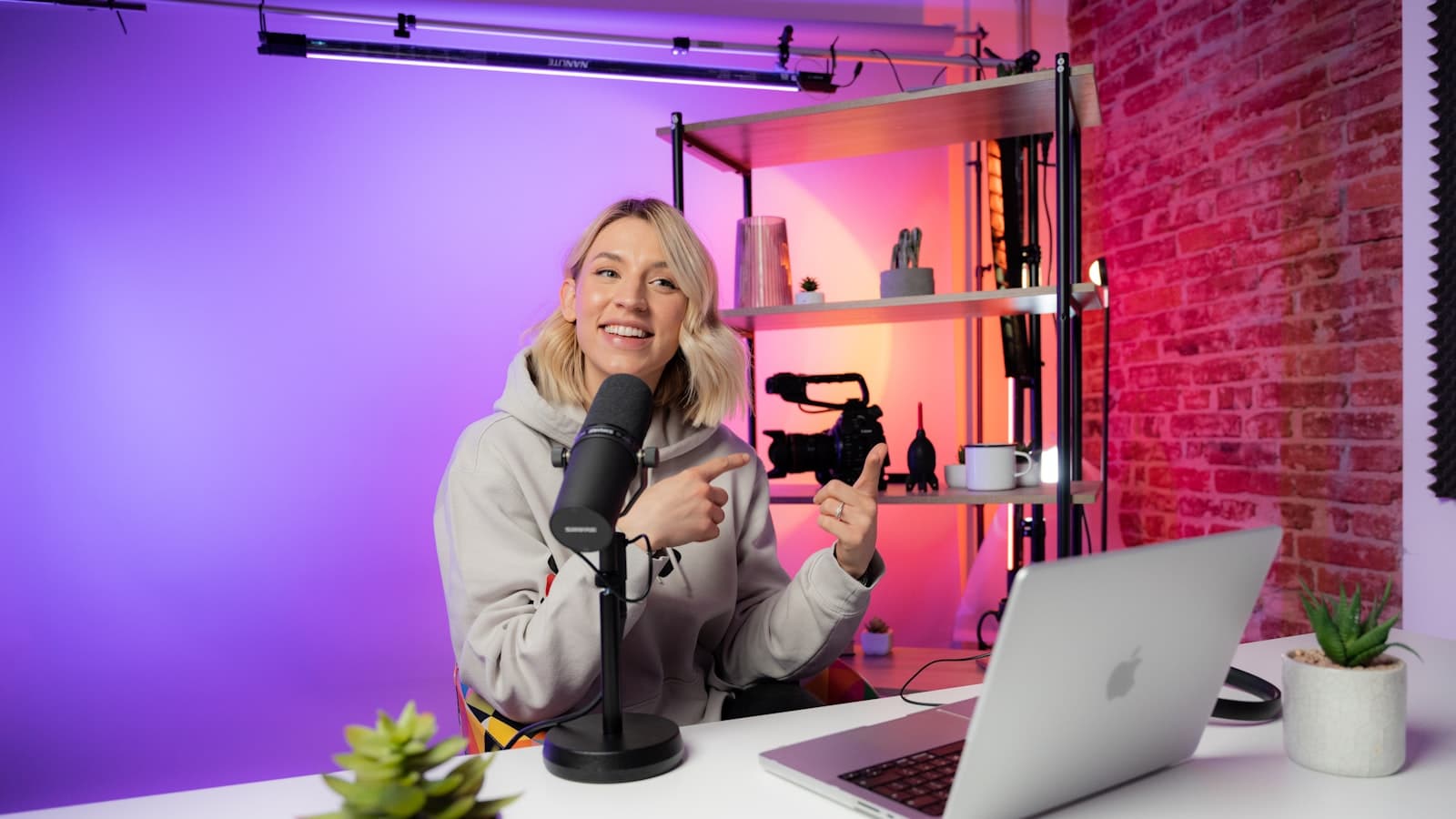
People assume AI is going to make the channel for them. It isn't. The hard part was never the part AI is good at. The hard part is the boring part: publishing every week while almost nobody watches, and sounding like a real human while you do it.
I run a small tech channel. I use AI most days. And I want to be honest about what that actually looks like, because the loudest voices online are either selling you a "fully automated faceless AI channel" course or telling you AI will steal your soul. Both are wrong, and both are trying to get something from you.
Here is the version I actually believe, from the inside: AI is leverage on the grunt work. Your humanity is the moat. If you get that order right, AI helps you grow. If you get it backwards, AI quietly turns your channel into the same generic mush as ten thousand others, and the audience can smell it.
This guide is written with African creators in mind especially. Our bandwidth is expensive, our time is split across day jobs and family, and our audiences often speak more than one language. AI can genuinely close some of those gaps. It cannot close the gap that matters most, which is you.
The line that decides everything
Before any tool, draw one line. On one side: the leverage and the grunt work. On the other: the things that make the channel yours.
AI can help with the leverage. Research, first-draft outlines, transcription, repurposing, organising. It is fast, tireless, and cheap. Let it carry the load that was always just admin pretending to be creativity.
AI must stay off the other side. Your voice. Your face. Your real stories. Your taste in what is worth saying. Your judgment about what is true. The moment AI starts writing your opinions and reading them in a cloned voice over a stock face, you have a content farm, not a channel. People do not subscribe to content farms. They subscribe to a person they trust.
Where AI genuinely helps
Let me be specific, because vague advice is useless. Here is where AI earns its place in my week.
Ideation and keyword research. I am never short of ideas, but I am often short of ideas people are actually searching for. I will describe my niche to an AI and ask it to cluster the questions a beginner would type, group them by intent, and flag which are too broad. I do not use its ideas wholesale. I use it to widen the net, then I pick with my own taste. The pick is the human part.
Scripting outlines, never the script. This is the boundary I guard hardest. I ask AI to help structure an outline: what order do these six points go in, what is the strongest opening angle, what am I forgetting. Then I write the script, or talk through the bullets, in my own words. An AI-written script read aloud sounds like an AI-written script read aloud. The cadence is wrong, the stories are missing, and the audience feels it even when they cannot name it.
Titles and thumbnails, as a brainstorm partner. Titles and thumbnails do most of the work of getting a video watched, so I want options. I will ask AI for twenty title variations and then throw out nineteen, often keeping a fragment of the twentieth and rewriting it myself. For thumbnails, AI is useful for generating background concepts or removing a busy background, but the face, the one bold idea, and the final taste call stay mine.
Transcription and subtitles. This is pure, honest grunt work and AI is excellent at it. Auto-transcription gives me a text version of every video in minutes. Subtitles make videos watchable on mute, which is how most people watch, and they make my English clearer for viewers who are still learning it. This alone saves me hours a week.
Repurposing one video into many things. This is the biggest leverage of all. From one long video and its transcript, AI helps me pull short-form clips, draft a blog post version, and sketch a newsletter. I edit every one of them, because the first draft is always a little flat. But starting from a draft instead of a blank page is the difference between repurposing happening and repurposing staying on my to-do list forever.
Editing assists. Modern editors use AI to find silences, remove filler words, and rough-cut a long recording down to its useful parts. I still do the final cut by hand, because pacing is taste. But letting the machine do the first ruthless pass over an hour of footage is a gift.
Translation for African-language reach. This one matters to me. Subtitling or summarising a video into Swahili, or other languages my audience speaks, widens who can find me. AI translation is not perfect and I have a human check anything I publish in a language I am shaky in, because a confident mistranslation is worse than no translation. But it opens a door that used to be closed to small creators entirely.
A small AI kit for creators
- Open
Whisper (via free tools)
FreeOpenAI's open-source speech-to-text model powers most free transcription and subtitle tools. Accurate across accents, which matters for African creators. Use it to caption every video and to generate the transcript you repurpose from.
- Open
Canva
Free tierThumbnails, channel art, and short-form layouts with AI background removal and design assists built in. The free tier is enough to start. Bring your own face and your own bold idea; let it handle the fiddly design work.
- Open
DaVinci Resolve
FreeA genuinely professional, free video editor with AI features for transcription-based editing and audio cleanup. Steeper to learn, but it grows with you and never charges a subscription.
- Open
Claude or ChatGPT
Free tierA general assistant for outline structuring, title brainstorms, keyword clustering, and turning a transcript into a blog or newsletter draft. A research and grunt-work partner, never the voice of your channel.
Some links may be affiliate. We only recommend tools we have personally vetted.
Notice what is not on that list: anything that generates your opinions, clones your voice, or replaces your face. That is on purpose.
Where AI must stay you
Now the other side of the line, the part that is easy to skip and most important.
Your voice is the way you actually talk, the specific things you find funny or annoying, the analogy only you would reach for. AI averages. By design it produces the most probable next word, which is another way of saying the least surprising one. Your audience came for the surprising parts. Hand the voice to AI and you sand off exactly what they subscribed for.
Your face and your presence are not a cost to optimise away. The "faceless AI channel" pitch sells the idea that you can scale without showing up. You can, for a while, and then you discover you have built something with no trust in it. People follow people. A real face explaining a real thing it has actually tried beats a synthetic narrator every time, especially in a feed full of synthetic narrators.
Your real stories cannot be generated. When I say "I tried this on a cheap phone for a week and here is what broke", that is mine and AI literally cannot produce it because it did not live it. Lived experience is the one input no model has. It is your unfair advantage. Use it relentlessly.
Your judgment about what is true is non-negotiable, especially on a tech or education channel. AI will state wrong things with total confidence. If you publish those without checking, you are spending the trust you spent years building, and trust does not refund. Every fact AI hands you is a draft to verify, not a quote to broadcast.
How I actually run a week
To make this concrete, here is roughly how AI sits in my workflow without taking it over.
I start with my own idea, usually from a real question a viewer asked or a problem I hit. I check it against AI keyword research to see how people phrase it and whether the angle is too broad. I pick the angle myself. I draft an outline with AI as a sounding board, then write or talk through the script in my own words. I record, with my face, telling at least one true story. I edit with AI assists for the first rough pass, then cut the final by hand. I run transcription, generate subtitles, and translate where it helps reach. Finally I repurpose the transcript into shorts, a blog post, and a newsletter, editing each so it sounds like me and not like a press release.
AI touched almost every step. It owned none of them. That is the whole trick.
If you are still setting up the channel itself, the foundations matter more than any AI tool, and I walked through them in How to Start a Tech YouTube Channel. And if you are thinking about how the channel fits a bigger picture of who you are, that is the longer game I wrote about in Building a Personal Brand as an African Technologist.
The honest bottom line
AI did not make growing my channel easy. It made the unglamorous parts faster, which freed up the hours I used to lose to transcription and repurposing and pointless title agonising. Those hours now go into the thing that actually grows a channel: showing up consistently as myself, with something real to say.
That is the deal on offer. Let AI carry the leverage and the grunt work so you can carry more of yourself into every video. Get greedy and let it carry you too, and you will end up with a channel that runs on autopilot toward nowhere, indistinguishable from the crowd. The creators who win the next few years will not be the ones who automated the most. They will be the ones who used automation to be more human, more often, more consistently than they could before.
Frequently asked questions
- Can AI grow my YouTube channel on its own?
- No. AI is excellent at the grunt work around a channel, like transcription, subtitles, repurposing, and brainstorming, but it cannot supply the voice, face, real stories, and judgment that make people subscribe. Use AI as leverage on a channel you are still genuinely creating, not as a replacement for creating it.
- Are fully AI-generated faceless channels a good idea?
- Rarely, and almost never as a durable strategy. They feel efficient but produce generic content with no trust behind it, so they are easy to ignore and easy to replace. People follow people. The one thing you cannot automate is being a person worth following.
- Should I use AI to write my scripts?
- Use it for outlines and structure, not for the words you say. An AI-written script read aloud sounds artificial, and your audience came for your specific voice and stories. Let AI help you organise; write or speak the actual script yourself.
- How can AI help me reach audiences in African languages?
- AI transcription and translation can subtitle or summarise your videos into languages your audience speaks, like Swahili, which widens who can discover you. Always have a fluent human check anything you publish in a language you are not strong in, because a confident mistranslation is worse than none.
- Is it risky to publish facts that AI gives me?
- Yes, if you do not verify them. AI states wrong things with full confidence, and on a tech or education channel a published error spends trust you cannot easily earn back. Treat every fact from AI as a draft to check against a reliable source before it goes live.
Further reading on this site
- How to Start a Tech YouTube Channel
- Building a Personal Brand as an African Technologist
- Browse Creator Economy
If you want the honest, no-hype version of what is actually working on my own channel, including how I use AI as it changes, subscribe to the newsletter.
The Newsletter
Liked this essay?
Get the next one in your inbox. One thoughtful email a week, nothing more.
Keep reading
Related articles
How to Start a Tech YouTube Channel
An honest, anti-hype guide to starting a tech youtube channel with cheap gear, a clear niche, and the consistency that actually grows it.
June 12, 2026 · 12 min read

How to Start a Blog in 2026 (And Whether You Still Should)
An honest guide on how to start a blog in 2026 — why blogging isn't dead, what's changed in the AI-answers era, and how to build an audience you actually own.
May 2, 2026 · 11 min read

The Best AI Tools for Writers in 2026
An honest guide to the best AI tools for writers in 2026 — for ideas, research, drafting, editing, and repurposing, without the soulless slop.
April 24, 2026 · 11 min read