AI Bias and Ethics, Explained Simply
A calm, plain-English guide to AI bias and AI ethics: where bias comes from, who it harms, and what ordinary people and builders can actually do about it.
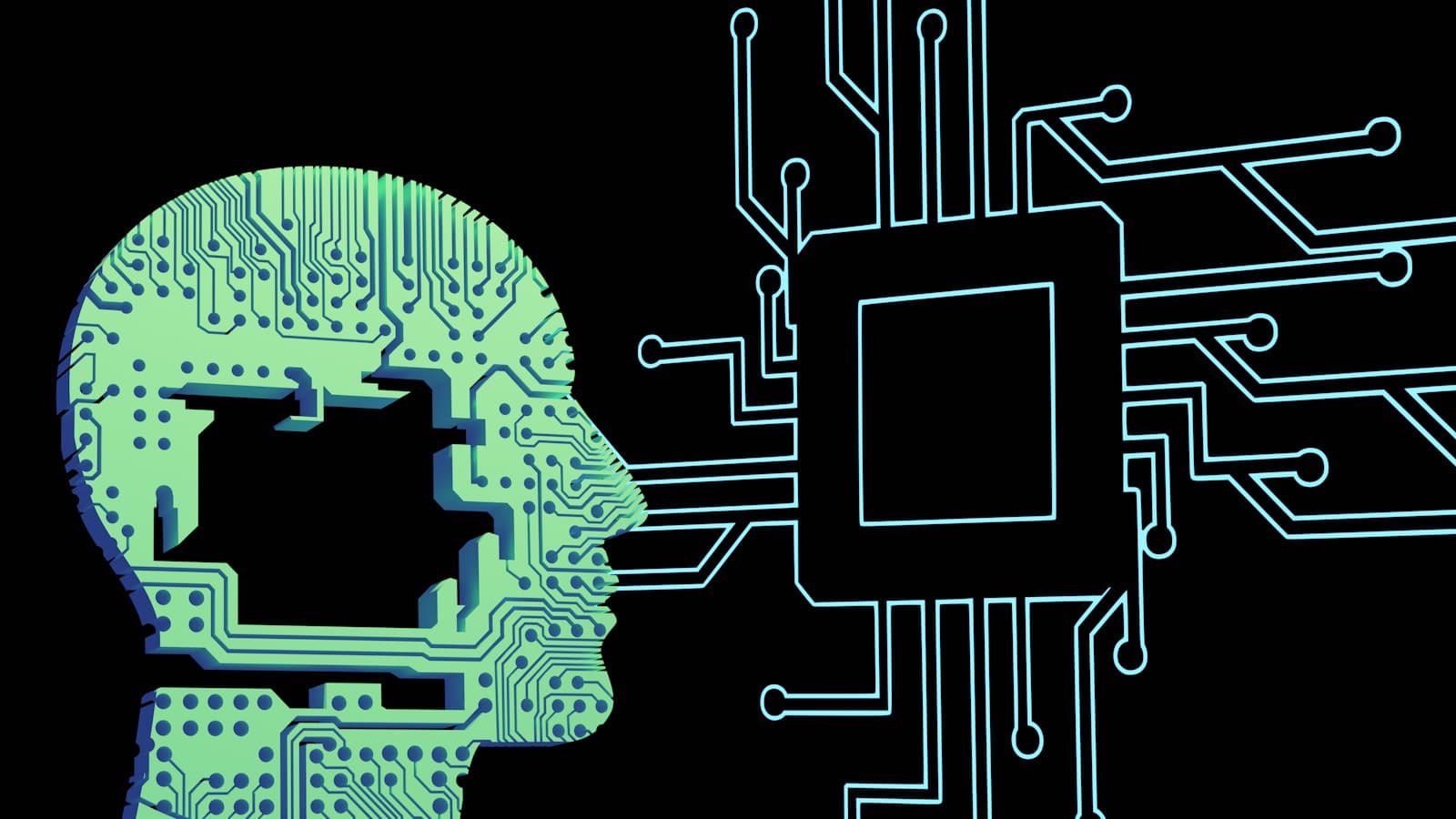
A while ago I watched someone type a simple request into an image generator: "a photo of a successful business leader." The grid that came back was almost entirely men in suits, all with the same pale, polished, boardroom look. No one in the room had asked for that. The person typing certainly hadn't. The machine just reached for what it had seen most often and handed it back as if it were the obvious answer. That small moment is the whole subject of this article in miniature. The model wasn't trying to insult anyone. It simply learned a pattern from the world's pictures, and the world's pictures lean a particular way.
I want to walk through AI bias and AI ethics calmly, without the two extremes that usually dominate the conversation. One extreme says these systems are evil machines plotting against us. The other says they're neutral tools and any complaint is overreaction. Both are wrong, and both let us off the hook. The truth is more ordinary and more demanding: AI reflects us, and we are responsible for what we build it from and how we use it.
Where bias actually comes from
The first thing to understand is that bias in AI is rarely a villain writing prejudiced code. It usually arrives quietly, through the data.
A model learns by studying enormous amounts of examples — text, images, decisions, records — and absorbing the patterns inside them. If those examples carry human bias, historical bias, or simple gaps, the model carries them too. Feed a hiring tool years of a company's past decisions, and if that company historically favored certain kinds of people, the tool learns to favor them as well. It doesn't know it's discriminating. It only knows what "a strong candidate looked like" in the data, and it repeats it.
Then there's the gap problem, and this is where I feel it most as someone writing from Africa. The majority of the text these models train on is in English and reflects Western contexts. African languages — Swahili, Hausa, Amharic, Yoruba, and hundreds more — are thinly represented or barely present. African names get misread or "corrected." African places, foods, customs, and histories show up as exceptions rather than as normal parts of the world. So a model can be fluent and confident and still treat half the planet as an afterthought. That's not malice. It's absence. But absence has consequences when these tools start making or shaping decisions about real people.
The myth of the neutral algorithm
You'll often hear that an algorithm can't be biased because "it's just math." I understand the appeal. Numbers feel objective. But this is one of the most quietly dangerous ideas in technology.
A model is built from human choices at every step. Someone decides which data to collect and which to leave out. Someone decides what "success" means for the system to optimize. Someone decides which mistakes are acceptable and which aren't. None of those choices are neutral, and all of them get encoded into something that then runs millions of times, fast, with the authority of a machine. The math is exact. The assumptions feeding it are human, and humans are not neutral.
There's an extra trap here. When a person makes a biased decision, we can argue with them. When a model makes the same decision, it can hide behind a veneer of objectivity — "the system flagged you," as if no one is responsible. That false neutrality is precisely what makes algorithmic bias harder to challenge than the human kind. It scales, and it deflects blame.
Where the harm actually lands
Bias matters because of where it shows up. These aren't hypotheticals; they're well-documented areas where biased systems have caused real harm.
Hiring. Automated screening tools have been found to downrank candidates based on patterns correlated with gender or background rather than actual ability — sometimes penalizing words or schools associated with women or minorities.
Lending and credit. When models decide who gets a loan or what rate they pay, gaps in the data can quietly disadvantage people from certain neighborhoods or groups, recreating old inequalities with a modern face.
Facial recognition. Several studies have shown these systems perform noticeably worse on darker-skinned faces and on women, leading to misidentification. When that technology is used in policing, the cost of an error is not abstract.
Healthcare. Tools meant to predict who needs care have sometimes used flawed proxies — like past spending — that underestimate the needs of poorer or underserved patients, sending help to those who already had access.
Content moderation. Systems that flag harmful content often stumble on languages and dialects they weren't trained well on, over-policing some communities while missing genuine harm in others. For African languages especially, this gap is wide.
Notice the pattern. In every case, the people most likely to be harmed are those already underrepresented in the data and already under-served by existing systems. Bias in AI tends to flow downhill, toward the people with the least power to push back.
The ethical questions underneath
Bias is the most visible issue, but ethical AI is a wider conversation. A few threads are worth naming plainly.
Fairness. Does the system treat similar people similarly, and does it avoid amplifying existing disadvantage? Fairness is genuinely hard to define — there are competing mathematical definitions that can't all be satisfied at once — but the question still has to be asked out loud.
Transparency. Can anyone explain why the system made a decision? "The model said so" is not an explanation a person deserves when they're denied a job, a loan, or care.
Accountability. When something goes wrong, who is answerable? A company can't outsource responsibility to its software. Someone built it, deployed it, and profited from it.
Privacy and consent. These models are trained on vast amounts of data, much of it scraped from the internet without anyone asking. Your words, your photos, your work may be in there. Consent was rarely part of the deal.
Labor. Behind the polished interface is human work — people, often in lower-income countries and paid little, labeling data and reviewing disturbing content to make the systems safer. Ethical AI has to include them.
Environmental cost. Training and running large models consumes significant energy and water. It's not catastrophe-level on its own, but it's real, and it's worth counting honestly rather than pretending the cloud is weightless.
I list these not to overwhelm you but because "ethics" can sound vague until you break it into specific questions you can actually ask of a specific system.
What ordinary people can do
You don't need to be an engineer to use these tools more wisely. A few habits go a long way.
Question the output. Treat AI answers as a confident first draft from someone who is sometimes wrong, not as a verdict. The more a decision matters, the more you should check it against other sources and your own judgment.
Watch for the gaps. If you're asking about your own context — your language, your country, your community — assume the model may be thin or shaky there, and verify accordingly. If you understand how these systems generate text in the first place, the failure modes make a lot more sense; I cover that in How Large Language Models Actually Work.
Keep a human in the loop for anything serious. No model should be the final word on a person's job, health, money, or freedom without a human who can be questioned and held responsible.
Demand transparency. When an organization uses AI to make decisions about you, you're allowed to ask how, and to expect a real answer.
What builders can do
If you're building with AI, the responsibility is heavier, and the good news is the levers are concrete.
Diversify your data. Actively seek out the voices, languages, and contexts your default datasets are missing. For those of us working in and for Africa, that often means doing the unglamorous work of collecting and including local data that the big global datasets ignore.
Test for disparity. Don't just measure whether the system works on average; measure whether it works for different groups. Average accuracy can hide serious failures for a minority.
Build in explainability and human review from the start, not as an afterthought once something has gone wrong.
Be honest about limits. State clearly what your system can't do and where it shouldn't be trusted. Anti-hype is an ethical act.
None of this is a reason to despair or to refuse the technology. I use AI nearly every day and find it genuinely useful. Bias and ethics aren't arguments against AI; they're the conditions for using it well. The systems reflect us. That means the work is partly technical and partly about who we choose to be while we build and use them.
If you want to think about this through a faith lens as well, I've written about that in Should Christians Use AI?, which sits alongside the more technical pieces.
Frequently asked questions
- Is AI bias intentional?
- Almost never. Bias usually enters through the data a model learns from — historical decisions, skewed examples, or missing groups — rather than through anyone deliberately coding prejudice. That's part of why it's so easy to miss: no one chose it, so no one feels responsible for catching it.
- Can AI bias be fixed completely?
- Not completely, but it can be measured and meaningfully reduced. Bias can be traced to specific data and design choices, then tested for and mitigated. The realistic goal is ongoing improvement and honest accountability, not a one-time perfect fix.
- Why does AI struggle with African languages and contexts?
- Because most training data is in English and reflects Western sources. African languages and contexts are underrepresented, so models are less accurate and less confident about them. Closing that gap requires deliberately collecting and including local data.
- If a model is just math, how can it be biased?
- The math is exact, but the assumptions feeding it are human. People choose the data, define what counts as success, and decide which errors are acceptable. Those choices carry bias, and the model faithfully scales whatever it's given. 'Neutral algorithm' is a myth.
- What's the single most useful habit for using AI responsibly?
- Keep a human in the loop for anything that matters. Treat AI output as a confident draft to be checked, not a final verdict — especially for decisions touching someone's job, health, money, or freedom.
Further reading on this site
If this was useful, subscribe to the newsletter for more calm, honest writing on AI, faith, and technology.
The Newsletter
Liked this essay?
Get the next one in your inbox. One thoughtful email a week, nothing more.
Keep reading
Related articles
What Is Vibe Coding? A Plain-English Guide
Vibe coding means describing what you want and letting AI write the code while you steer. Here is how it works, what it's great for, and where it bites.
June 10, 2026 · 8 min read

AI Agents Explained: What Actually Changed in 2026
A calm, plain-English explainer on AI agents: how they differ from chatbots, the core loop, real examples, why 2026 feels different, and honest limits.
June 8, 2026 · 10 min read
How Large Language Models Actually Work (Plain English)
A calm, honest explainer on how large language models work: tokens, training, parameters, fine-tuning, context windows, and why LLMs hallucinate.
June 5, 2026 · 11 min read